7 Netherlands Visas Americans Can Use to Move to Europe
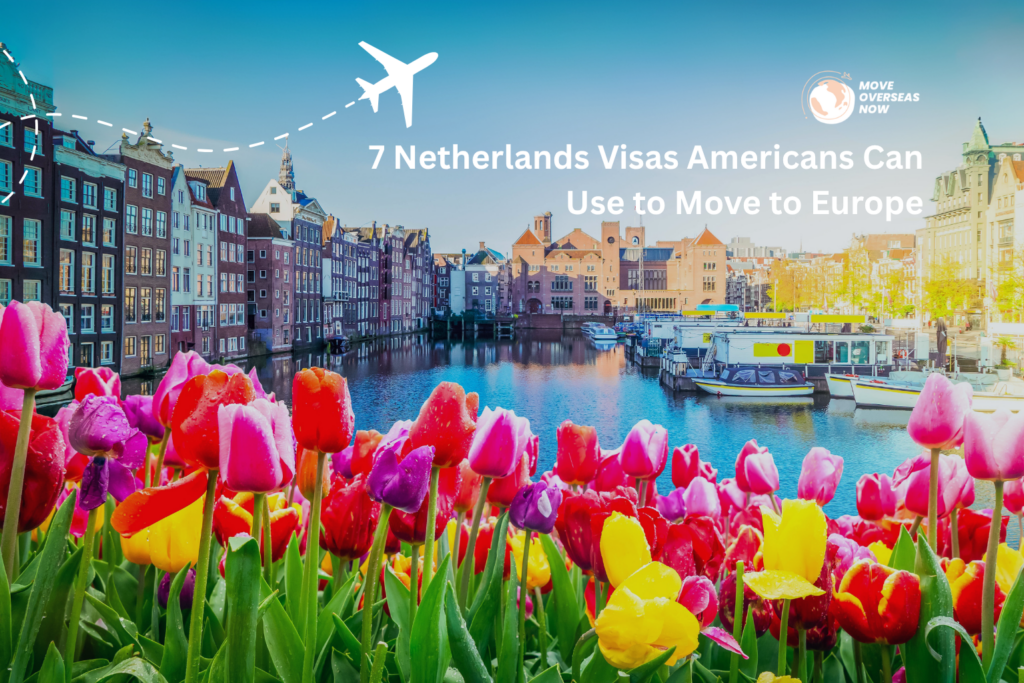
If you've been researching Netherlands visas to move from the U.S., you're probably already buried in acronyms like MVV, IND, and Kennismigrant, plus three different forum threads where nobody actually agrees on anything. You pictured cobblestone streets, a bike path along a canal, the kind of unhurried morning that feels completely out of reach back home. So you finally opened a browser, and landed in a maze.
Here's the thing: you are not in a bad position. Americans have a solid starting point because your U.S. passport gets you into the Netherlands visa-free for short visits. But the moment you want to stay longer than 90 days, work, study, or put down real roots, an entirely different set of rules kicks in. That's what this guide is for. Below you'll find all 7 Netherlands visa routes Americans can use to build a real life there, complete with eligibility requirements, income thresholds where they apply, and the actual steps to get started.
What Americans actually need to know about Netherlands visa rules before applying
The single biggest misconception Americans bring to this process is thinking they need a Schengen visa to enter the Netherlands. You don't, at least not for short visits. But that exemption has limits most people don't fully understand until they've already made a costly mistake.
Americans are visa-exempt for short stays: here's exactly what that means
U.S. passport holders can enter the Netherlands and the broader Schengen area without applying for anything in advance. The rule is 90 days within any rolling 180-day period. That window is generous enough to scout neighborhoods, attend meetings, and get a real feel for the country before committing. What it does not allow is working, studying, or living there legally. The moment your purpose shifts from visiting to residing, you need a formal permit.
ETIAS Netherlands entry: what it means for U.S. passport holders
Starting in the last quarter of 2026, Americans will need to complete ETIAS (the European Travel Information and Authorization System) before entering the Netherlands or any Schengen country. This is not a visa. It's a quick online pre-clearance, similar to the U.S. ESTA system for visitors to America. The fee is €20, and travelers under 18 and over 70 are exempt from the fee entirely. The EU has confirmed a Q4 2026 target but has not yet locked in a specific launch date. If you're planning a scouting trip to the Netherlands before applying for a longer-stay permit, build ETIAS into your travel checklist.
Netherlands residence permit (MVV): when you cross from visitor to resident
Once you want to live, work, or study in the Netherlands for more than 90 days, you'll typically need one or both of the following: an MVV (machtiging tot voorlopig verblijf, which translates roughly to “authorization for provisional stay”) and a residence permit issued by the IND, the Dutch immigration service. The MVV is the entry visa you use to travel to the Netherlands; the residence permit is the document that allows you to stay. Many Americans find this two-step structure confusing at first, but it follows a straightforward logic once you understand which permit category matches your situation.
Income documentation, sponsor status, the right category from day one, there's a lot riding on getting this right. Book a call and let's map out your exact visa path, real talk.
Work-based Netherlands visas: the 3 routes most Americans qualify for
If you have a Dutch employer, you're being transferred by your current U.S. company, or you hold a relevant degree and a solid job offer, the Netherlands has well-defined pathways for you. These three work-based Netherlands visa options are the most common for Americans making a professional move.
1. Highly Skilled Migrant Visa (Kennismigrant): the most direct route for employed Americans
The Kennismigrant permit is designed for high-earning professionals with a Dutch employer registered as an IND-recognized sponsor. The salary thresholds for 2026 are €4,357 gross per month for workers under 30 and €5,942 gross per month for workers 30 and older, excluding the 8% holiday allowance. What makes this route more manageable than it sounds is that the employer does most of the administrative work on your behalf. The IND reviews the sponsor's standing and the salary level, which means your primary job is gathering your personal documents rather than navigating the full IND process alone.
2. EU Blue Card: for highly educated workers with a job offer
The EU Blue Card targets applicants with at least a bachelor's degree and a job offer meeting a minimum salary threshold comparable to the Kennismigrant route. The key practical difference is that the Blue Card has an EU-wide framework, which can make it easier to transition to other member states later. It's typically valid for up to four years and is renewable. If you're weighing the Blue Card against the Kennismigrant permit, the most important factor is usually whether your employer holds IND-recognized sponsor status, which is required for the Kennismigrant route but not for the Blue Card.
3. Intra-company transfer: for Americans sent by their U.S. employer
If your current U.S. company has a branch, subsidiary, or affiliate in the Netherlands and wants to relocate you there, the intra-company transfer permit is your path. You'll need to have worked for the company for a minimum period, typically at least three months, before the transfer. The documentation package includes a transfer letter, your employment contract, and proof of the relationship between your U.S. employer and the Dutch entity. This permit is generally valid for up to three years for managers and specialists, making it a solid bridge while you build your life in the Netherlands.
The orientation year visa: the permit most Americans miss
Most Americans planning a Netherlands move have never heard of the Zoekjaar permit. For the right candidate, it's one of the most practical Netherlands visa options available.
4. Zoekjaar: who qualifies and what the one-year window actually covers
The Zoekjaar is an orientation year permit that gives recent graduates one full year to find work or start a business in the Netherlands without needing an employer lined up first. To qualify, you must have completed your degree within the last three years. If you studied in the Netherlands at an accredited institution, that covers bachelor's degrees, master's degrees, post-master's programs of at least one academic year, and PhDs. If you graduated outside the Netherlands, your university must have ranked in the top 200 of a recognized global ranking, THE, QS, or ARWU, in the year you graduated. You also cannot have previously held a Zoekjaar permit.
Income, documents, and how to make the most of this window
There's no minimum income requirement to obtain the Zoekjaar itself, but you do need to demonstrate that you can financially support yourself during the year. The IND assesses this on a case-by-case basis, with funds of roughly €1,100 to €1,500 per month serving as a general benchmark; your specific situation may differ. Your core document package includes your passport, degree certificate, transcript, proof of your graduation date, and financial documentation. The application fee runs approximately €228 to €243 for 2026.
The real strategic value of this permit is what comes after. Once you land qualifying employment during the year, you can transition directly to a Kennismigrant permit without leaving the country. That continuity is significant.
Self-employment and startup visas: options for American entrepreneurs
If you're planning to freelance, launch a business, or relocate an existing practice to the Netherlands, you're not locked out. This route does require more upfront preparation than an employer-sponsored path, but it's a legitimate and well-structured option.
5. Self-employment permit and startup visa: what's the difference
The Netherlands startup visa is for innovative businesses working with a recognized Dutch facilitator, typically an accelerator, incubator, or business development organization. It's valid for one year initially, with the possibility of renewal if you've hit agreed milestones. The self-employment residence permit is the longer-term route for established freelancers and entrepreneurs whose businesses don't fall under the startup category. This permit typically runs for two years.
The self-employment route doesn't use a flat salary threshold. Instead, the IND uses a points-based “essential interest” test administered by the RVO (Netherlands Enterprise Agency). You need to score at least 30 points in each of three categories: personal experience, business plan, and added value for the Dutch economy.
Alternatively, you can qualify by scoring at least 45 points in both personal experience and business plan, which bypasses the third category entirely. Understanding which scoring path fits your background is worth working through carefully before you file.
What income and documentation the IND actually wants to see
For the self-employment permit, your business needs to generate enough income to support you without drawing on public funds. The IND ties this benchmark to the statutory minimum wage, which adjusts twice yearly, so the exact figure shifts. Your application package needs to include a thorough business plan, proof of relevant professional experience, and documentation showing the viability of your income. Incomplete or vague business plans are the most common reason these applications stall, so working with an immigration advisor before you file significantly reduces the chance of a request for supplemental information.
Family reunification and study visas: the two remaining pathways
Two more routes are especially relevant for Americans: joining a partner or family member already living in the Netherlands, and enrolling in a Dutch degree program. Both follow the MVV-plus-residence-permit structure through the IND.
6. Partner and family reunification: eligibility and what your sponsor needs
To join a spouse, registered partner, or qualifying family member in the Netherlands, your sponsor must already hold a valid Dutch residence permit. They also need to meet the 2026 income requirement of €2,337 gross per month excluding holiday allowance (€2,523.96 including holiday allowance for the July through December 2026 period). That income must be independent, sustainable, and come from a contract valid for at least 12 months from the application date.
Your document package will include proof of the relationship, marriage certificate, registered partnership documentation, or equivalent, a copy of the sponsor's residence permit, and financial evidence. Processing typically runs several weeks to a few months depending on the IND's current caseload.
7. Study visa (MVV): how Americans enroll and stay legally
Getting into a Dutch university is the first step, but the visa process runs in parallel. Most accredited Dutch institutions are IND-recognized sponsors, which means they actively assist international students with the residence permit application rather than leaving you to navigate it alone. You'll need to show you can financially support yourself during your studies, with the IND expecting around €900 to €1,000 per month in available funds. Your permit duration is generally tied to the length of your program, and you're eligible to remain in the Netherlands after graduation if you transition to another permit category, including the Zoekjaar.
How to apply for Netherlands visas without making the mistakes that cost Americans months of time
The IND process is organized and predictable, but it has very little tolerance for incomplete files, wrong permit categories, or improperly prepared documents. These are the errors that turn a straightforward application into a six-month delay.
The step-by-step application process: from IND to appointment to decision
The general sequence for most Netherlands visa and residence permit applications looks like this:
- Confirm the correct permit type for your specific situation and purpose of stay.
- Gather your documents: a passport valid for at least three months beyond your intended stay, Dutch-specification photos (3.5 cm x 4.5 cm, white or light background, no older than six months), financial proof, and purpose-specific documentation.
- Submit through the IND portal, Netherlands embassy, or VFS Global, depending on your permit type and location.
- Pay the applicable fee. For standard Schengen short-stay visas, it's €90 for adults, but long-stay and residence permit fees vary significantly by category.
- Attend your biometrics appointment to submit fingerprints and a photo.
- Track your application status using the reference number provided by VFS or the embassy system.
Short-stay Schengen visa decisions typically come within 15 calendar days, though they can extend to 45 days in complex cases. Residence permit decisions through the IND run anywhere from 30 to 90 days depending on the permit category.
Common mistakes that stall Netherlands visa applications
The errors that delay applications most often are applying for the wrong permit type in the first place, submitting documents in English without certified Dutch translations when required, working with an employer who turns out not to hold IND-recognized sponsor status, and underestimating how thoroughly the IND scrutinizes income documentation. These aren't obscure edge cases. They're the reasons perfectly eligible Americans get rejection letters or restart their applications from scratch months after they first filed.
Why getting clarity on your visa category before you apply saves everything
One of the most expensive mistakes you can make in this process is spending months preparing the wrong application. Inside Move Overseas Now Academy, a Netherlands-specific module walks you through exactly which permit fits your situation, whether you're a remote worker exploring the Zoekjaar, an entrepreneur navigating the essential interest scoring system, or an American joining a partner who is already there. The 1-on-1 coaching sessions inside the Academy help members work through their IND documentation and income requirements before they file, not after a rejection forces them to start over.
Frequently asked questions about Netherlands visas for Americans
Which Netherlands visas let Americans work?
Three Netherlands visa routes permit Americans to work: the Highly Skilled Migrant (Kennismigrant) permit, the EU Blue Card, and the intra-company transfer permit. Each requires either a qualifying job offer or an employer-initiated transfer. The Zoekjaar orientation year permit allows you to search for work during a one-year window, after which you can transition to a work-based permit if you secure qualifying employment.
Do Americans need a Schengen visa for the Netherlands?
No. U.S. passport holders are exempt from the Schengen visa requirement for stays up to 90 days within any 180-day period. However, starting in Q4 2026, Americans will need ETIAS authorization before entering any Schengen country, including the Netherlands. ETIAS is not a visa, it's an online pre-clearance that costs €20 and takes only a few minutes to complete.
How long does the IND take to process a Netherlands visa application?
Processing times vary by permit type. Short-stay Schengen decisions typically arrive within 15 calendar days. Long-stay residence permits processed by the IND generally take 30 to 90 days, depending on the category and the completeness of your application file.
What is the Netherlands residence permit (MVV)?
The MVV (machtiging tot voorlopig verblijf) is the entry authorization most Americans need before traveling to the Netherlands for a long-stay purpose. It functions as your entry visa and is issued by the Dutch embassy or consulate in the U.S. Once you arrive in the Netherlands on an MVV, the IND issues your actual residence permit, which governs how long you can stay and under what conditions.
Moving to the Netherlands is genuinely within reach
You don't have to figure this out alone. The Netherlands visa system is structured, the income thresholds are published, and the IND process follows predictable steps once you understand which category applies to your life. The difference between a smooth approval and a months-long stall almost always comes down to two things: knowing which of the seven Netherlands visas actually matches your situation, and building your file correctly from day one.
If moving to the Netherlands has been sitting in the back of your mind and you're ready to stop researching in circles and start building a real plan, the free live Q&A is the best place to start, where you can bring all your biggest questions about moving abroad, or you can book a one on one action plan call with a relocation advisor on her team to map out your exact visa path, income documentation, and timeline, so you're walking into that IND application with everything in order.
There is always a path. You just need the right map.