Greece's Financially Independent Person Visa: US Guide
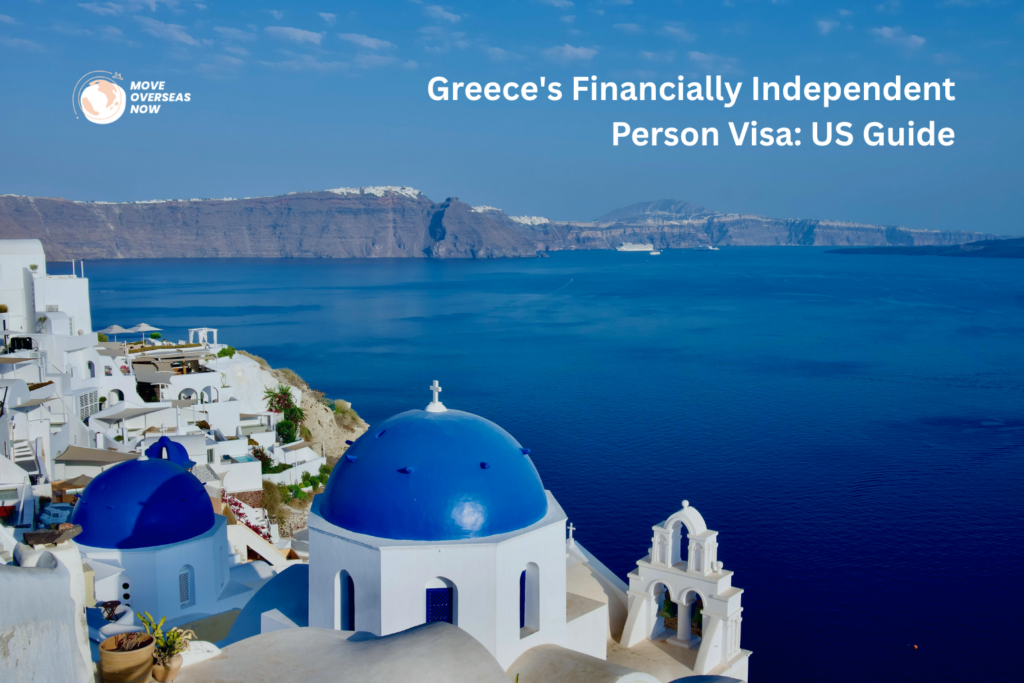
Picture this: you're sitting on a whitewashed terrace somewhere in the Greek islands, coffee in hand, watching the Aegean shimmer in the morning light. Then the practical part of your brain kicks in. “Wait, can I actually stay here? Is there a visa for someone like me who lives on a pension and investments?” There is. It's called the Financially Independent Person visa, or FIP visa, and Greece designed it specifically for non-EU nationals who can prove stable passive income without needing to work locally.
Here's the thing: the Greece FIP visa is one of Europe's lesser-known residency options, and a lot of Americans with the right income profile walk right past it without realizing they likely qualify on income they're already earning. Those are exactly the kinds of income streams Greek immigration is looking for: Social Security, dividends, rental income, and retirement distributions. The challenge is figuring out whether your specific financial picture meets the bar, which documents to gather, and how the two-stage application actually works from a U.S. starting point.
This is the kind of question we help Americans answer inside the Move Overseas Now Academy every week, so let's break it down clearly. Below you'll find eligibility rules, income thresholds, a full document checklist, what to expect on timeline and fees, how Greek tax rules affect U.S. filers, and how Greece stacks up against Portugal and Spain for passive income visas.
What Greece's financially independent person visa actually is
The FIP visa, formally known as the Financially Independent Individual visa, is a Greek national visa category for non-EU and non-EEA nationals who want to live in Greece without taking local employment. Greece created it to attract financially stable foreign residents: retirees on pension or Social Security, investors living on dividends and portfolio income, and people whose rental income from property outside Greece covers their living expenses. If you fall into any of those categories, this visa was essentially built for you. It functions as both a Greece retirement visa pathway and a long-term residency option for investors and passive-income earners.
One important distinction: the FIP visa is not a digital nomad visa. FIP holders cannot take employment with a Greek employer or run an active business inside Greece. The question of whether U.S.-based remote employment counts against you is more nuanced and worth reviewing carefully with a relocation advisor, since the specific structure of your work arrangement matters. The core principle is that your financial foundation must come from passive sources, not active work in Greece.
In Greek immigration terms, qualifying passive income includes pensions, Social Security benefits, dividends, interest and investment portfolio distributions, and rental income from property located outside Greece. The origin rule works in Americans' favor: your income must come from outside Greece, and for most Americans, every income stream they have is U.S.-sourced by default. This makes Greece non-EU residency for retirees particularly accessible compared to some other European programs.
Breaking down the financially independent person visa Greece income thresholds
The core requirement for a single applicant is €3,500 per month in stable passive income, which works out to €42,000 per year (And you can also apply if you show a savings of €126,000).. For families, the threshold scales up: a spouse or registered partner adds 20% to the household requirement, bringing a couple to €4,200 per month. Each dependent child adds another 15%, or €525 per month. So a couple with one child needs to demonstrate approximately €4,725 per month in qualifying passive income.
For American readers, it helps to put €3,500 in dollar terms. As of mid-2026, that's roughly $3,850 to $3,950 per month (check a current rate before applying, since exchange rates shift). For many retirees combining Social Security with investment account distributions or rental income, this threshold is closer than they initially think. Consider a retiree drawing $2,200 in Social Security plus $1,800 in IRA distributions, that combination already clears the bar. The threshold is not the lowest in Europe, but it's genuinely achievable for a financially stable American household.
Some guides describe an alternative path based on a lump-sum savings equivalent, commonly cited at roughly €126,000 for a single applicant, which represents three years of the €3,500 monthly requirement. Consulate practice on the savings route varies, however, and many posts favor income-based documentation because it's easier to verify on a recurring basis. That said, some consulates do accept a documented savings equivalent, so it's worth confirming with your specific post before assuming one path is unavailable to you. When both options are on the table, demonstrating consistent monthly passive income tends to make for a cleaner application.
Financially independent person visa Greece: document checklist and timeline
The FIP application is document-heavy, and putting together a clean, complete file is the single most effective way to avoid delays. Greek consulates handle the initial stage, and the documents they ask for fall into several clear categories. Here's what you'll typically need:
- Valid U.S. passport with sufficient remaining validity
- 6 to 12 months of official bank and brokerage statements showing regular passive income credits
- Social Security benefit verification letter or pension award letter
- Rental agreements and payment records if rental income is part of your application
- Most recent U.S. tax returns to corroborate your income history
- Private health insurance policy valid in Greece
- Criminal background check with apostille
- Proof of accommodation in Greece (lease or property ownership documents)
FIP visa documents: apostilles and translations
Foreign documents, including your U.S. background check, typically need an apostille and a certified Greek translation. The Greek consulate that covers your state of legal residence handles your application, not just any Greek consulate. Document requirements can vary slightly between posts, so check with your specific consulate for their current list.
Consular timeline: Type D long-stay visa to residence permit
The application runs in two stages. Stage 1 is the Type D long-stay visa application at the Greek consulate. You book an appointment, submit your full document file, and in many cases attend an interview. The consular fee is approximately €99, though fees can vary by post and are subject to change, confirm the current amount directly with your consulate. Processing times range from a few weeks to about two months depending on the post and how complete your file is.
Stage 2 happens after you arrive in Greece: you file the Greece residence permit passive income application with local immigration authorities, submit biometrics, and receive a temporary receipt confirming lawful stay while your card is processed. The first FIP residence permit is issued for three years, with a permit application fee of approximately €300 (again, verify the current fee with local authorities before applying, as these figures can be updated).
One rule that cannot be skipped: you cannot enter Greece on a tourist visa and convert your status from inside the country. The process must begin at the consulate before you arrive. This is a common misconception that causes real problems for people who try to shortcut the process.
Book a call and let's map it out, real talk, before you commit to anything.
Tax residency, health insurance, and keeping your permit valid
The FIP visa is an immigration status, not a tax status. Receiving the permit does not automatically make you a Greek tax resident. Greek tax residency is typically triggered by spending 183 or more days in Greece within any 12-month period, or by establishing your primary life ties there, meaning your family, home, and main economic interests are centered in Greece. If you cross that threshold, Greece will generally tax your worldwide income.
This is where it gets important for Americans: you file U.S. taxes regardless of where you live in the world. Becoming a Greek tax resident means you now have two potential tax systems in play. The good news is that Greece offers a notable benefit for certain retirees: a 7% flat tax on eligible foreign pension income for up to 15 years under Greece's special tax regime for foreign-income pensioners. That can be genuinely attractive compared to ordinary progressive tax rates. The U.S. side of the picture involves FBAR reporting for foreign accounts above $10,000, potential Form 8938 obligations, and the Foreign Tax Credit to avoid double taxation. The interaction between Greek and U.S. tax rules is one of the areas where a personalized review matters most, because the answer depends heavily on your specific income sources and how much time you spend in Greece each year.
On health insurance, valid private coverage in Greece is required for the initial application and must be maintained throughout your residency. For permit renewal, you'll need to show that you still meet the income threshold, maintain health insurance, and have actually been living in Greece. Most 2026 guidance references approximately 183 days per year as the practical minimum stay for renewal, though that figure appears in multiple sources with slight variations, so confirm the current rule with a qualified immigration advisor. The permit renewal test and the tax residency test are separate legal standards, and both deserve attention before you commit to a plan. Getting the tax side reviewed before you book your flight could save you a significant amount of money and paperwork down the road.
Greece vs. Portugal vs. Spain: picking the right passive income visa
The Greece FIP visa doesn't exist in a vacuum. Most Americans exploring passive income residency in Europe are also looking at Portugal's D7 visa and Spain's non-lucrative visa. Each has a different income threshold, a different tax picture, and a different lifestyle attached to it.
Portugal's D7 is the most established option, and it carries the lowest income bar of the three. The 2026 baseline for a single applicant is approximately €920 per month, which makes it accessible to a wider range of Americans. The tradeoff is that Portugal's popularity has pushed up the cost of living in Lisbon and Porto significantly, and the minimum stay requirement (typically 183 days per year to maintain residency) means you're actually living there. Portugal's NHR tax regime was restructured in recent years, and the replacement framework affects how certain income types are taxed, so Portugal's tax picture now requires more careful analysis than it once did.
Spain's non-lucrative visa sits roughly in the middle of the three. The 2026 income threshold is approximately €2,400 per month for a single applicant (based on 400% of Spain's IPREM reference index), with additional funds required for dependents. Spain requires you to actually live there for most of the year to renew, and based on what we hear consistently from Americans who have navigated both systems, Spain's bureaucratic process tends to be more involved than Greece's. The lifestyle and culture are the main draw for people specifically pulled toward Spanish cities and the Spanish way of life.
Here's a simple decision frame: if your passive income sits between €1,000 and €2,500 per month, Portugal's D7 is likely the most accessible entry point. If you're at €3,500 per month or above and genuinely drawn to Greek islands, Athens, or the Peloponnese, Greece's FIP is a strong fit with a compelling tax benefit on top. Spain suits people who are specifically committed to Spanish culture and can navigate a more involved bureaucratic process. Choosing between these three countries based on your income sources, tax situation, and lifestyle goals is exactly the kind of decision we help Americans work through inside the Move Overseas Now Academy, and it's one of the most common conversations in our coaching sessions.
Real people are doing this
This isn’t rhetorical. One of our Academy members recently got the message every applicant is hoping for: FIP visa approved.

That’s the process working exactly the way it’s supposed to: a clear income picture, a clean document file, and support from people who’ve done this before.
Your next step toward a life in Greece
If you're already earning €3,500 or more per month from pensions, Social Security, dividends, or rental income, Greece's financially independent person visa puts a real, legal life on the Greek coast within reach. The process is genuinely navigable when you have a clear roadmap: confirm your income qualifies, build your document file carefully, apply at the Greek consulate covering your state, and complete the residence permit process once you arrive in Greece.
The tax side of this move deserves a serious look before you commit. The 7% flat tax benefit for foreign-income pensioners is a genuine advantage, but how it intersects with your U.S. filing obligations depends on your specific situation. Getting that reviewed by someone who understands both systems before you book a one-way flight is one of the smartest investments you can make in this process.
You don't have to figure this out alone. If moving abroad has been sitting in the back of your mind, this is your sign to finally understand your options with some real clarity. Inside the next free Move Overseas Now masterclass, where we walk through exactly how to plan your move to Europe on passive income, from visa eligibility to choosing the right country for your situation. From there, you can book a session with a relocation advisor on her team to map out your personalized path. There is always a path, and yours might lead straight to the Greek coast.