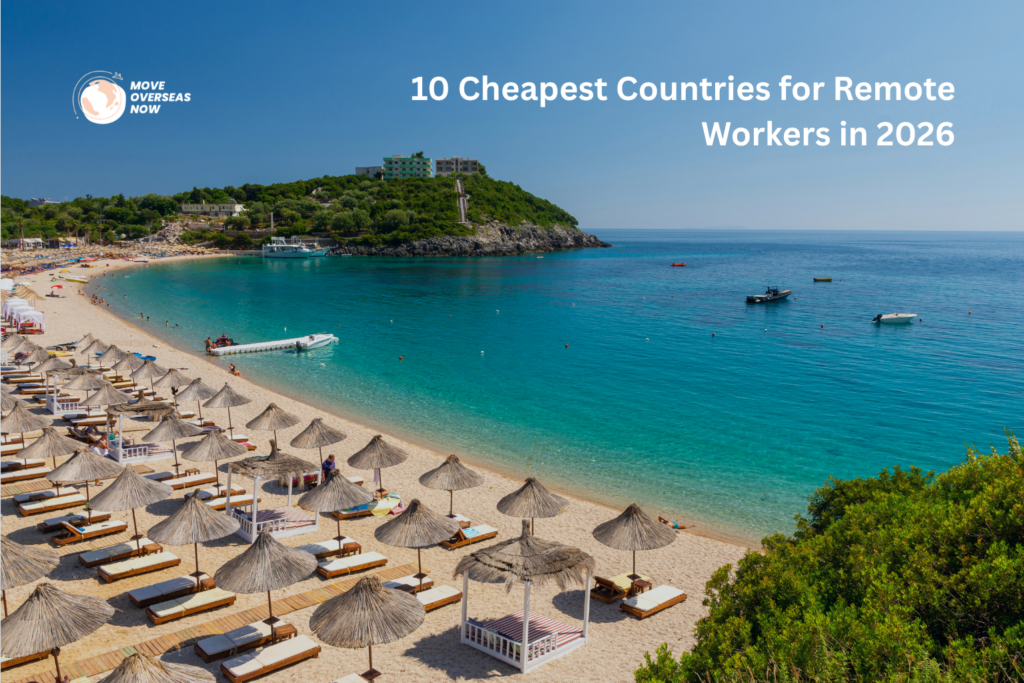
10 Cheapest Countries for Remote Workers in 2026
If you're asking what are the most budget-friendly countries for long-term remote work, you've probably already wasted time on lists full of vague advice, no real numbers, and zero mention of what happens after your 90-day tourist window runs out. That kind of content isn't written for people who want to actually move. It's written for people who want to click.
Most remote workers searching for affordable long-term destinations aren't planning a vacation. They want to know whether they can genuinely live, work, and feel settled somewhere new without draining their savings. That's the real question, and it's the conversation driving this guide. The 10 destinations below come with concrete budget ranges, visa pathways, and internet reliability data, the specifics you actually need to make a decision in 2026.
By the time you finish reading, you'll have a working shortlist, honest all-in monthly costs, and a clear picture of visa rules for 10 destinations worth serious consideration this year.
What "budget-friendly" actually means for long-term remote work
Cheap rent alone does not make a country remote-work friendly. A $300/month apartment means nothing if your internet drops every afternoon, you're on tourist status that expires in 60 days, and a basic doctor's visit costs $400 out of pocket. The real benchmark is your all-in monthly cost: rent, food, coworking or reliable home internet, transport, and health insurance combined. Every destination in this list is evaluated against both standards.
Legal status matters just as much as cost. Running your life on a tourist visa creates financial and legal instability that compounds over time. Border runs are stressful, unpredictable, and in many countries, increasingly scrutinized. A digital nomad visa or residency pathway isn't a bonus feature for serious long-term movers. It's a non-negotiable part of the plan, and it's factored into every recommendation below.
What are the most budget-friendly countries for long-term remote work? A quick look by tier
The 10 destinations below are organized into three spending tiers. The tiers reflect all-in monthly costs for a single remote worker living comfortably, not roughing it, but not splurging either. Pick the tier that matches your realistic post-tax budget, then dig into the individual profiles.
Under $1,000/month: three affordable remote work destinations with real infrastructure
These aren't roughing-it destinations. They're established hubs with coworking spaces, decent healthcare access, and fast internet in their main cities, and they cost significantly less than most people expect.
Albania: Europe's best-kept budget secret
All-in monthly budget: $700, $900. A furnished one-bedroom in Tirana runs approximately $300, $450/month based on current expat reports, food costs are low, and coworking spaces are increasingly available as the digital nomad scene grows. Albania has a one-year digital nomad visa for remote workers earning at least €817/month from non-Albanian sources, and U.S. citizens enter visa-free for short stays. Mobile data coverage is strong in urban areas. For Americans who want a European address without the European price tag, Albania is hard to beat as a budget-friendly expat destination.
Panama (Boquete and David): Latin America's tax-friendly budget pick
All-in monthly budget: $900, $1,300. Skip Panama City, where rent alone can eat your whole budget, and head inland to Boquete or David instead. A furnished one-bedroom in either runs $400, $800/month, groceries land around $250, $350, utilities (air conditioning included) run $70, $150, and fiber internet is $25, $50. The real draw for remote workers isn't the rent, it's the tax setup: Panama runs a territorial tax system, so foreign-source income isn't taxed locally. The Friendly Nations Visa is one of the cleanest, fastest residency pathways in Latin America for citizens of 50-plus countries, with a route to permanent residency in five years, and there's a dedicated Short-Stay Remote Worker Visa for people who want to test things out first. Panama is also fully dollarized, so there's no currency conversion to think about.
Georgia (Tbilisi): 365 visa-free days for Americans
All-in monthly budget: $900, $1,300 depending on lifestyle. Tbilisi one-bedrooms run approximately $400, $636, food costs are low, and the coworking scene is growing steadily. Georgia's visa arrangement for Americans is one of the most generous in the world: under the bilateral agreement, U.S. citizens can stay a full year without any visa application at all. Internet infrastructure has improved significantly over the past few years, and the expat community is large enough that settling in is much easier than most people expect. Note that some 2026 cost-of-living data places comfortable monthly spending closer to $1,200, $1,500 for those who prefer more amenities, so treat $900 as a lean estimate.
Visa applications, banking abroad, U.S. tax obligations, they all take real steps. Book a call and let's map out your exact path, real talk, based on your situation.
$1,000, $1,500/month: the sweet spot for comfort and affordability
This is the range where most American remote workers land when they want a genuine quality-of-life upgrade without the anxiety of an ultra-lean budget. These cost-of-living destinations for remote workers offer lively expat communities, solid infrastructure, and a noticeably higher standard of living than the tier above.
Thailand (Chiang Mai): the nomad city that started it all
Groceries in the Netherlands run about €250 to €400 per person per month, with most single adults landing around €300 to €350 if they shop at Albert Heijn or Lidl rather than specialty stores. For context, Dutch grocery prices are generally comparable to mid-size U.S. cities like Austin or Denver, and sometimes slightly higher for dairy and meat. Shopping at Lidl or other discount options can bring your monthly spend toward the lower end of that range without much sacrifice.
Utilities for a small apartment average €150 to €250 per month in 2026, covering electricity, gas, and water. That's a reasonable ballpark if you're not heating a large space or running a home office with heavy equipment. Combined, groceries and utilities for one person typically land in the €400 to €650 range per month.
Colombia (Medellín): affordable Latin America with city energy
All-in monthly budget: $1,000, $1,400. Medellín has earned its reputation: a mild climate year-round, a strong coworking culture, and internet speeds at coworking spaces that routinely hit 100, 200 Mbps. Colombia offers a digital nomad visa valid for up to two years, which provides real legal stability. Private health insurance for expats runs approximately $100, $200/month, and the cost of eating well and living comfortably is well below what most Americans are used to paying stateside.
Mexico (Mexico City and Oaxaca): close to home, lower on cost
All-in monthly budget: $1,000, $1,500, varying significantly by city. Mexico City's central neighborhoods run toward the higher end; Oaxaca is considerably cheaper. Mexico's temporary residency visa gives Americans a legitimate long-term path after the initial tourist card, valid up to 180 days, runs out. The practical advantage that rarely shows up on nomad lists is time zone alignment: if you're working U.S. hours, staying on Central or Eastern time eliminates the scheduling headaches that come with Southeast Asian destinations.
Indonesia (Bali): lifestyle-forward and still affordable
All-in monthly budget: $1,000, $1,500. Bali offers a Second Home Visa and a digital nomad visa pathway, both of which give Americans options beyond the standard tourist stamp. Internet reliability varies: coworking spaces in Seminyak and Canggu are consistently strong, but connectivity outside those areas can be patchy. Private healthcare through local clinics is affordable for routine care, though evacuation insurance is worth adding for more serious medical situations. The digital nomad community here is large and well-connected.
$1,500, $2,000/month: budget-friendly countries for long-term remote work with European-level infrastructure
This tier won't feel cheap compared to Southeast Asia, but for Americans paying $3,000, $5,000/month in a U.S. city, the math still works out to a significant lifestyle upgrade. These destinations offer stronger healthcare systems, better legal infrastructure, and in some cases a real pathway toward European residency.
Portugal: the American expat favorite with a real visa pathway
All-in monthly budget: $1,500, $2,000 outside Lisbon, and often lower in cities like Porto or Braga. Porto one-bedrooms run roughly €900, €1,300/month; Braga comes in around €650, €750. Portugal's D7 Passive Income Visa and its Digital Nomad Visa, which requires approximately €3,040/month in verifiable remote income, per Portugal's immigration authority, give Americans two solid legal paths. Legal residents access Portugal's SNS public healthcare system. Fiber internet is reliable in cities, English is widely spoken, and the expat community is among the most established in Europe. Lisbon runs noticeably higher than other Portuguese cities, so budget-conscious movers should look north.
Costa Rica: Latin America's solid mid-range option
All-in monthly budget: $1,500, $2,000. Costa Rica has two relevant visa pathways: the Rentista visa and a dedicated digital nomad visa. Private health insurance runs approximately $100, $300/month, and the quality of private healthcare is high by regional standards. Internet infrastructure in urban areas is solid, and time zone alignment with the U.S. East Coast makes work calls straightforward. The large existing American expat presence means the practical side of settling in, finding housing, setting up banking, is less of an unknown than in less-traveled destinations.
Greece (Athens): the EU bargain with real infrastructure
All-in monthly budget: $1,700, $2,200, with a realistic midpoint around $2,000. A one-bedroom in a good Athens neighborhood runs €500, €800/month, and costs drop further on the islands or in smaller mainland cities. Athens holds its own against the more famous nomad hubs: solid fiber internet, a mild climate, and a food scene that makes cooking at home genuinely enjoyable rather than a chore. Greece offers a digital nomad visa for remote workers earning at least €3,500/month, plus a flat-tax incentive for foreign retirees that can make the numbers even better for anyone drawing a pension alongside remote income. Full EU membership means EU-wide healthcare access and freedom of movement once you're in, something none of the other destinations on this list can offer.
Visa rules that keep you legal for six months or longer
The biggest mistake remote workers make is assuming a tourist visa is sufficient for a multi-month stay. It isn't, and authorities in many countries are paying closer attention to this than they were a few years ago.
Of the countries on this list, the ones with formal digital nomad visas include Albania (one year), Portugal, Costa Rica, Colombia, and Thailand's LTR visa. Common requirements across these programs include proof of remote income, minimum monthly income thresholds ranging from roughly $1,500, $3,500 depending on the country (for example, Albania's program sits near the lower end while Portugal's Digital Nomad Visa is closer to the top), valid health insurance, and a clean criminal record. These visas provide real legal protection and are worth the paperwork.
For the others, the situation requires more planning. Georgia's 365-day visa-free stay for Americans requires no application at all. Mexico allows up to 180 days on a tourist card, after which temporary residency is the proper next step. These options work, but they require more flexibility and proactive planning than a formal nomad visa does
Three questions that cut your list from 10 to two or three
Reading lists like this one is useful. At some point, though, more research becomes a reason not to take action. If you've been sitting with this decision for months, you don't need more countries. You need better filters.
First: what's your realistic all-in monthly budget after taxes? That single number eliminates half these destinations immediately. Second: do you need European time zone overlap for work calls? If yes, Albania, Portugal, and Greece move to the top fast. Third: are you open to navigating a language barrier, or do you need strong English-speaking infrastructure? Georgia require more language adjustment than Mexico or Portugal. Answer those three honestly and a list of 10 countries becomes a shortlist of two or three real candidates.
Once you have that shortlist, the next challenge is the actual steps: which visa to apply for, how to set up banking abroad, what to do about U.S. tax obligations, and how to time your move around your work situation. Move Overseas Now Academy was built specifically for Americans navigating this process, with courses covering visas, finances, healthcare, and country-specific logistics, plus a community of people at every stage of the move.
The best place to start is the free “Abroad in a Year” masterclass. It walks you through the framework for planning a move overseas, clarifies your visa options, and helps you figure out which destinations actually fit your life. From there, you can book a call with a relocation advisor on Shawna's team to get personalized guidance for your specific situation.
Rent in Amsterdam is comparable to Boston, Chicago, or Washington, D.C., and higher than most mid-size American cities. Some imported goods and certain food categories also run slightly higher than U.S. equivalents. If you're moving from a low-cost-of-living U.S. city, rent in Amsterdam or The Hague will be a real adjustment. That's the honest answer.
The right country is out there, and it fits your budget
Now you know what the most budget-friendly countries for long-term remote work actually look like in practice. There's no perfect destination, but there is a right one for your budget, your work schedule, your healthcare needs, and the kind of life you want. The three tiers covered here, under $1,000, $1,000, $1,500, and $1,500, $2,000, show that affordable long-term remote work abroad is available across a much wider income range than most Americans realize.
Go back to your shortlist with the all-in monthly budget framework in mind. Add up rent, food, coworking, transport, and insurance before you compare destinations. That honest number changes the conversation completely. You're not too late, and you don't have to figure this out alone. Start with the free masterclass and take it one step at a time.