
How to Get a Thailand Digital Nomad Visa as a US Remote Worker
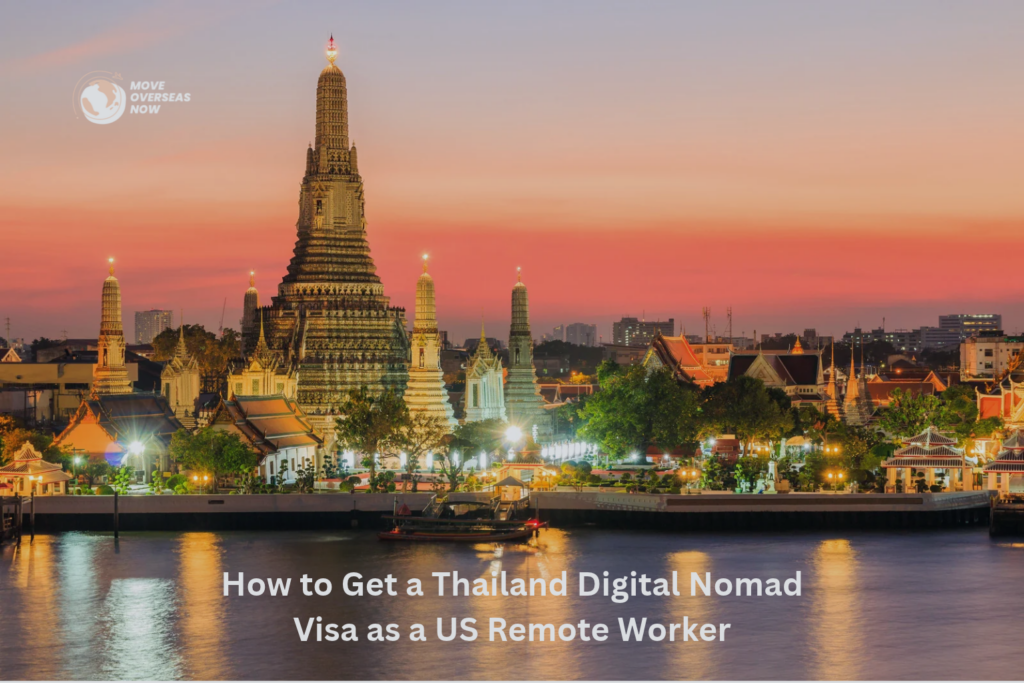
The digital nomad Thailand visa, officially called the Destination Thailand Visa (DTV), is a five-year, multiple-entry visa that lets American remote workers stay up to 180 days per entry.
Honestly, if you've been eyeing Thailand as your base for remote work and you've felt completely overwhelmed by the visa process, you're not alone. A foreign visa system looks intimidating from the outside. The good news is that the DTV is a genuinely straightforward long-stay option for American remote workers, and this guide breaks it down step by step so you know exactly what to do and in what order.
Key takeaways
- Five-year, multiple entry: The DTV is valid for five years and allows stays of up to 180 days per entry, making it one of the most flexible long-stay options in Southeast Asia.
- Online application: The DTV is applied for through Thailand's official e-Visa portal; applications are generally submitted online through thaievisa.go.th, and in most U.S. posts you will not need to mail or submit your passport, but always check the specific Thai post's instructions.
- FBI certificate required: As of August 31, 2026, DTV applicants must provide an FBI criminal history certificate issued within three months of applying.
- Tax residency is cumulative: Spending 180 or more days total in Thailand during a calendar year makes you a Thai tax resident, regardless of how many separate entries you use.
- No Thai clients allowed: The DTV only covers remote work for foreign employers or clients. Working for Thai employers requires a separate work permit.
Do you qualify for Thailand's digital nomad visa?
The DTV was built specifically for remote workers, digital nomads, freelancers, and foreign talent who work for employers or clients located outside Thailand. It also covers people coming to Thailand for approved soft-power activities like Muay Thai training or Thai culinary courses. If you're a salaried employee at a U.S. company working remotely, or a freelancer with foreign clients, you fit the profile the DTV was designed for.
One thing that trips up a lot of applicants: you cannot use the DTV to work for Thai employers or serve Thai clients. That setup requires a Non-Immigrant B visa and a work permit, which is a completely different process. If you're running a business that serves both foreign and Thai clients, get clarity on how that breaks down before applying.
The financial requirement is a bank balance, not a monthly income threshold. There is no universal minimum monthly income stated for the DTV. What you need is at least THB 500,000 or its equivalent showing in your bank statements covering each of the most recent three months. For most American remote workers earning in dollars while spending in Thai baht, this is achievable. Keep in mind that individual Thai embassies and consulates can interpret requirements slightly differently, so always verify with the specific mission where you'll be applying.
She also asked the question I wish more people would ask themselves: if we don't do the things we've wanted to do for a long time, then what happens? You are not too late. Whether you're 26 or 56, there is always a path. It just might not be the one you pictured first.
Join the free masterclass and learn how to pick the right destination for your income and time zone.
What documents do you need to gather before applying?
Core document package
Your core document package for the DTV includes your passport bio page (valid for at least six months from your intended travel date), a recent passport-style photo taken within the last six months against a plain white background, and proof of legal U.S. residence. You'll also need three months of bank statements showing the THB 500,000 balance, plus proof of qualifying remote work. For employment, that means an employment contract or employer letter that explicitly confirms you work remotely for a foreign employer. For freelancers, client contracts, invoices, or a professional portfolio that makes the picture clear will work. If you're bringing a spouse or children under 20, add a marriage certificate and birth certificates.
FBI certificate and timing
As of requirements effective August 31, 2026, you also need an FBI criminal history certificate issued within three months of your application date. Request this early. The fingerprinting and processing steps take time, and you don't want a document timing issue to delay an otherwise complete application.
Notarization and apostilles
Not everything needs to be notarized or apostilled. Standard documents like bank statements and employer letters generally do not require apostille or notarization. Official documents like a marriage certificate or criminal record certificate may require an apostille, particularly for documents issued in the U.S. The key is to check the exact requirements of the specific Thai embassy or consulate handling your application before you get anything certified, because requirements vary by location. Don't apostille everything automatically, and don't skip that verification step either.
How much does the Thailand remote work visa cost?
Government fees
Per the Royal Thai Embassy and consulate fee schedules, the Thai government fee for the DTV is approximately THB 10,000, around $280–300 USD, for the five-year, multiple-entry visa. Note that the specific U.S. consulate handling your application may publish a slightly different local fee, so confirm the current amount with your Thai post before paying. The fee is nonrefundable regardless of the outcome, so make sure your application is complete before submitting.
Extension and optional costs
If you need to extend your stay in-country later, Thai Immigration lists the 180-day extension fee as THB 1,900, about $55 USD. Optional costs to budget for include a certified translation if any of your documents aren't in English or Thai, and third-party document preparation services if you want help assembling your package. Those services range from roughly THB 3,000 on the lower end to THB 45,000 for a full-service provider. Many Americans handle this independently, and that's entirely reasonable with a well-organized checklist.
Processing time
For processing time, most complete, well-prepared applications are processed in 5–15 business days per the Los Angeles consulate's published guidance. Realistically, budget 2–4 weeks to account for embassy workloads and any requests for additional documents. Incomplete applications are the leading cause of delays, which makes front-loading your document prep worth every hour.
How to apply for the digital nomad Thailand visa step by step
The DTV application is submitted through Thailand's official e-Visa portal at thaievisa.go.th. For most U.S. applicants, this is not an in-person or mail-based process, though you should check your specific Thai post's instructions to confirm. After approval, you receive an electronic confirmation by email, which you print and present to Thai immigration on arrival.
Before you open the portal, confirm which Thai mission has jurisdiction over your U.S. state of residence. The Royal Thai Embassy in Washington, D.C., and the consulates-general in Los Angeles, Chicago, and New York each cover different states. Apply through the post covering your actual residence, not whichever one seems most convenient. This is a common mistake and a documented reason for rejection.
When you're ready to submit, here's the sequence that keeps things clean:
- Confirm your DTV category (workcation, soft-power activity, or dependent).
- Download the current document checklist from the specific Thai post handling your application.
- Gather your passport, photo, proof of U.S. residence, three months of bank statements, employment or freelance evidence, and FBI criminal certificate.
- Create an account on thaievisa.go.th, select the DTV, and choose your Thai post.
- Complete the online form with information that exactly matches your documents.
- Upload clear electronic copies of all required documents.
- Pay the application fee online (nonrefundable).
- Monitor your email and the portal during processing. If additional documents are requested, respond quickly and completely.
- Download and print your e-Visa approval confirmation for your flight and Thai immigration.
The most common rejection reasons come down to a handful of fixable issues: bank statements that don't cover the full three months, employment letters that confirm employment but don't mention remote work authorization, freelance evidence that's vague or inconsistent with your bank deposits, an FBI certificate that's expired or missing, and applying through the wrong consulate. If your application is rejected, it's usually fixable with better documentation. It's not the end of the road.
What are the tax rules every DTV holder needs to understand?
Thai tax residency and the 180-day threshold
Something that catches a lot of remote workers off guard: the 180-day DTV allowance per entry and Thailand's 180-day tax residency threshold are two completely different clocks running independently. Thai tax residency is based on your total physical presence in Thailand from January 1 through December 31. If you spend 180 or more days in Thailand across all of your entries combined in a single calendar year, you become a Thai tax resident. DTV status provides no special tax exemption from that threshold.
As a Thai tax resident, you may be subject to Thai income tax on foreign-source income remitted to Thailand, under rules in effect since January 2024. If you stay under 180 total days in the calendar year, foreign-source income remitted to Thailand is generally not taxable on that basis, though Thai-source income and other rules can still apply. One important nuance: a second entry or an in-country extension can push you past 180 cumulative days even if each individual stay felt short. Track your days carefully.
U.S. filing obligations
As a U.S. citizen, you still have U.S. filing obligations regardless of where you live. Consult a tax professional who works with U.S. expats before making large transfers into Thailand.
Bangkok or Chiang Mai: what life looks like on the DTV
Both cities work well for American remote workers, and the right choice depends entirely on the kind of daily life you want. Bangkok is a massive, fast-paced city with world-class co-working infrastructure, excellent transit, international food from every cuisine imaginable, and easy access to flights across Southeast Asia. Mid-range living costs in Bangkok run roughly $1,400 USD per month, per nomadsurance.com data from late 2026, with a typical range of $1,050 to $1,700 USD depending on your neighborhood and lifestyle. Neighborhoods like Ekkamai, Phrom Phong, and Ari consistently rank as strong starting points for American remote workers: solid BTS access, reliable internet, and a mix of cafés, restaurants, and coworking spaces within walking distance.
Chiang Mai runs about 25–35% cheaper than Bangkok, with a mid-range monthly budget around $1,000 USD, per nomadsurance.com data from late 2026. The Nimman area is the dense hub of digital nomad life there: coworking spaces, cafés, gyms, and a large international community concentrated in a compact, walkable neighborhood. The pace is slower, the air cooler (outside of burning season, roughly February through April), and the community tight-knit. For American remote workers on a tighter budget or craving a quieter daily rhythm, Chiang Mai consistently delivers.
| Factor | Bangkok | Chiang Mai |
|---|---|---|
| Best nomad neighborhood | Ekkamai / Phrom Phong | Nimman |
| City pace | Fast, urban, cosmopolitan | Slower, compact, community-focused |
| Transit | BTS, MRT, extensive options | Scooter or ride-share |
| International flights | Excellent hub access | Regional, with Bangkok connections |
| Air quality concern | Occasional pollution | Burning season Feb–Apr |
One practical consideration that many Americans underestimate is time zone alignment. Thailand is 11–12 hours ahead of U.S. Eastern time depending on daylight saving. If your job requires regular synchronous collaboration with a U.S. team, you may find yourself working late evenings or nights. Worth knowing before you book the flight.
If you're weighing Thailand against European digital nomad visa options, like Portugal's D8 or Spain's Digital Nomad Visa, the right answer depends on your income level, time zone needs, long-term residency goals, and the kind of lifestyle you're building. That comparison is exactly what our free “Abroad in a Year” Masterclass was designed to help you work through. We walk you through how to evaluate different destination options as an American so you can make the decision based on your actual situation, not just what sounds exciting online.
You have everything you need to take the next step
The DTV is a practical Thailand long-stay visa for freelancers and remote workers that holds up to real-life use. A five-year visa with 180 days per entry and a financial requirement many Americans earning in USD can meet, that's a genuinely accessible path. The key is preparation. Know your documents, verify the current requirements with your specific Thai consulate, get your FBI certificate early, and understand the tax implications before you book a one-way flight.
The piece that stops most people isn't the paperwork. It's not knowing where to start, what order to do things in, or whether this is even the right country for their situation. You deserve to know your options clearly before making a decision this significant. If Thailand sounds compelling but you're still weighing it against other destinations, the best place to start is our next free masterclass on how to get a digital nomad Thailand visa and plan your move overseas, with more clarity and confidence. From there you can book a call with a relocation advisor on our team to talk through your specific situation.
There is always a path. You don't have to figure this out alone.
Frequently asked questions about the digital nomad Thailand visa
What is the digital nomad Thailand visa?
It's officially called the Destination Thailand Visa (DTV). It's a five-year, multiple-entry visa that allows qualifying remote workers, freelancers, and digital nomads to stay up to 180 days per entry while working for foreign employers or clients.
How much does the digital nomad Thailand visa cost?
The Thai government fee is approximately THB 10,000 (around $280–300 USD), per Royal Thai Embassy and consulate fee schedules. This fee is nonrefundable. An in-country 180-day extension costs an additional THB 1,900 (about $55 USD), per Thai Immigration.
Is Thailand a good remote work visa option for Americans?
The DTV is a well-structured option for U.S. remote workers and freelancers with foreign clients. It has a clear eligibility framework, a five-year validity, and a reasonable financial requirement. That said, every person's situation is different, tax implications, time zone fit, and lifestyle preferences all matter.
Do I need to submit my passport in person for the DTV?
Applications are generally submitted online through thaievisa.go.th, and in most U.S. posts you will not need to mail or submit your passport in person. However, practices can vary by consulate, so check the specific Thai post's instructions for your state of residence.
How long does it take to get the DTV approved?
Most complete, well-prepared applications are processed in 5–15 business days per the Los Angeles consulate's published guidance. Budget 2–4 weeks to account for embassy workloads and any document follow-up requests.
Does the 5-year Thailand visa for remote workers make you a Thai tax resident?
The DTV itself does not trigger tax residency. What does is spending 180 or more cumulative days in Thailand within a single calendar year (January 1 through December 31). Once you cross that threshold, you are considered a Thai tax resident and may owe Thai income tax on foreign-source income remitted to Thailand.
Can freelancers apply for the Thailand long-stay visa for freelancers (DTV)?
Yes. Freelancers with foreign clients are explicitly eligible for the DTV. You'll need to demonstrate qualifying work through client contracts, invoices, or a professional portfolio, and your bank deposits should be consistent with the income you're claiming.